
Analytical Lab Equipment: What Each Instrument Measures and How to Specify It
Analytical lab equipment measures what a sample is made of and how much of each part it holds. A spectrophotometer reads how much light a solution absorbs. A pH meter reads acidity. A gas chromatograph separates a mixture into its parts. This guide explains the instruments buyers ask about most, what to check in each spec sheet, and what to send when you request a quote from LabExports, which manufactures and exports lab equipment from India.
The same instruments serve very different users. A university chemistry department wants them for teaching and research. A food or water lab uses them for routine quality control. A medical college needs them for clinical training. Start by writing down which of these jobs your lab does, because that decides the specification.
Where analytical lab equipment is used
Most analytical lab equipment answers one of three questions. What is this substance? How much of it is there? Does it meet the required limit? Labs that ask them include:
- Chemistry and research labs in universities
- Drug and food quality control labs
- Environmental and water testing labs
- Clinical and medical college labs
- Materials, petrochemical and forensic labs
- Life science and molecular biology labs
A teaching lab can often accept a simpler model with a clear display and a robust build. A lab that reports to a regulator also needs traceable calibration and full records.
Common analytical instruments and what to check
UV-Vis and double beam spectrophotometers
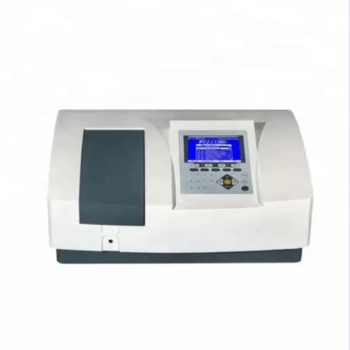
A UV-Vis spectrophotometer measures how much ultraviolet or visible light a sample absorbs. A double beam model splits the light into two paths, one through the sample and one through a reference. This cancels drift in the lamp and gives steadier readings. Check the wavelength range, spectral bandwidth, wavelength accuracy, and photometric range. Ask whether the software can export data and run scans or kinetics.
FTIR spectrophotometer
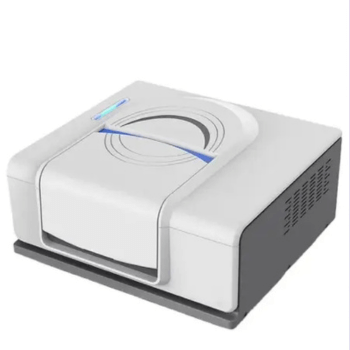
Not in our catalog; available on request, so confirm it in your quote. An FTIR (Fourier transform infrared) spectrometer records the infrared absorption spectrum of a sample. Each chemical bond absorbs at its own wavenumbers, so the spectrum works like a fingerprint. Labs use it to identify polymers, organic compounds and raw materials. Most mid-IR instruments cover about 4,000 to 400 cm⁻¹. Check the resolution, the sampling accessories (such as ATR or a KBr pellet press), and the spectral library.
Digital pH meter
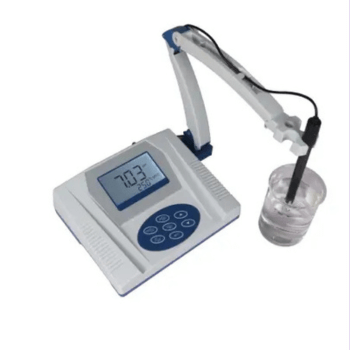
A digital pH meter measures how acidic or alkaline a liquid is. It is one of the most common instruments in chemistry, biology and water labs. Check the resolution and the number of calibration points. Ask if it has automatic temperature compensation. Ask about spare electrodes, since the electrode wears out long before the meter does. Calibrate it with fresh buffer solutions before each session.
Digital polarimeter
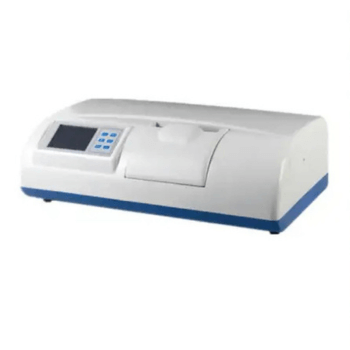
A polarimeter measures how far a sample rotates plane-polarised light. That rotation reveals the concentration or purity of optically active compounds such as sugars and many drugs. Food, sugar and pharmaceutical labs rely on it. Check the measuring range, the resolution in degrees, the sample tube lengths supplied, and whether temperature is controlled.
PCR thermal cycler
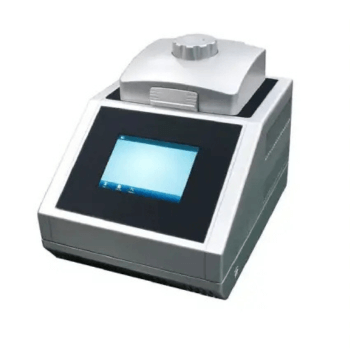
A PCR thermal cycler copies DNA by cycling a sample block through set temperatures for denaturing, annealing and extension. It sits at the centre of any molecular biology or diagnostics teaching lab. Check the block format (for example 96-well or 0.2 ml tubes), the ramp rate, temperature uniformity, whether it can run a gradient, and whether the lid is heated.
Hematology analyzer

Not in our catalog; available on request, so confirm it in your quote. A hematology analyzer counts blood cells and measures haemoglobin and platelets from a small sample. Hospitals, clinics and medical college labs use it. Check whether it gives a 3-part or 5-part white cell differential, the number of parameters, the throughput, and the reagents it needs. Reagent supply is a running cost, so plan for it in the tender.
Bomb calorimeter

Not in our catalog; available on request, so confirm the model in your quote. A bomb calorimeter burns a weighed sample in oxygen inside a sealed steel vessel. It measures the heat released, which gives the calorific value of fuels, foods and other materials. Methods such as ASTM D240 (liquid fuels) and ISO 1928 (solid fuels) use this principle. Check the temperature resolution, the oxygen filling setup, and the safety features of the bomb.
Digital conductivity meter
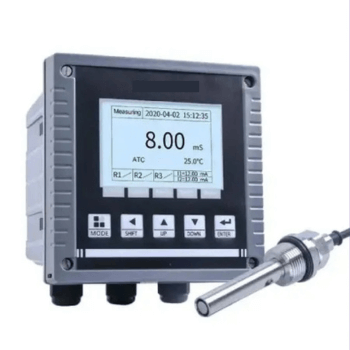
A conductivity meter measures how well a solution carries an electric current. This reflects the amount of dissolved ions, so it is a fast check on water purity. Check the measuring ranges (µS/cm to mS/cm), the cell constant of the probe, and temperature compensation to 25 °C. Some models also report TDS. Choose a benchtop or handheld unit for teaching, and a panel unit for continuous monitoring.
Digital turbidity meter

A turbidity meter, or nephelometer, measures how cloudy a liquid is by reading the light scattered by suspended particles. Results are given in NTU. Water treatment and environmental labs use it daily. Check the range, the light source, and the calibration standards supplied. ISO 7027 describes an infrared method, and US EPA Method 180.1 describes a white-light method, so match the one your lab reports to.
Gas chromatography

Not in our catalog; available on request, so confirm it in your quote. A gas chromatograph separates compounds that vaporise without breaking down. The sample moves through a column in a carrier gas, and a detector records each compound as it comes out. Oil, food, forensic and environmental labs use GC. Check the detector type (such as FID or TCD), the oven temperature range, the injector, and the carrier gas the site can supply.
How to choose analytical lab equipment for your lab
Good analytical lab equipment starts with the method, not the brochure. Work through these points before you ask any supplier for a price:
- Method and sample: list the tests, sample types, and the detection limits you need.
- Accuracy and resolution: state the figures your method requires, not the highest figure available.
- Calibration: ask what standards or reference filters come with the instrument, and how often it needs recalibration.
- Software and data: check data export, report printing, and any audit trail your lab needs.
- Site services: confirm mains voltage and frequency, gas supply, bench space and room temperature.
- Consumables and spares: list lamps, electrodes, columns and reagents the instrument will use.
- Training and manuals: ask for an operating manual in a language your staff reads.
Regulated labs often work under Good Laboratory Practice (GLP) rules or an accreditation such as ISO/IEC 17025. These rules apply to how the lab works. Ask for the calibration and test documents your quality system needs, and check them against your own procedures.
Care and safety for analytical lab equipment
Most faults in analytical lab equipment come from simple causes. Dust in the optics, a dry pH electrode, or a dirty sample cell will all spoil results. Keep instruments covered, on a stable bench, and away from direct sun and fume sources. Log each calibration so you can spot drift early.
Some instruments bring their own hazards. GC uses compressed gases. A bomb calorimeter works with high-pressure oxygen. A hematology analyzer handles blood. For these, follow the maker's manual and ask your safety officer. US labs can refer to the OSHA laboratory standard, 29 CFR 1910.1450, for chemical hygiene planning.
What to include in a quote request or tender
A clear request gets quotes you can compare. For each item of analytical lab equipment, send:
- The instrument name and the tests it must run
- Key figures such as wavelength range, resolution, or measuring range
- Quantity, and whether spares or consumables are included
- Mains voltage, frequency and plug type at the site
- Documents needed, such as a technical data sheet, manual, or test report
- Delivery country and any tender reference number
Pricing is on request. It depends on the model, the accessories, the quantity, and the destination. For public tenders, LabExports can prepare technical specification sheets and quotations to match the bid format.
Find analytical lab equipment in the catalog
Browse the spectrophotometer range, including single and double beam UV-Vis and atomic absorption models. For water and routine tests, see the water testing equipment, which covers pH meters and flame photometers. Food labs can compare the food analysis lab equipment, which lists a digital polarimeter and a PCR machine. For supporting equipment, see laboratory research equipment.
FTIR, GC, hematology analyzers and bomb calorimeters are not in the online catalog, so name them in your enquiry and confirm availability in the quote. Read our spectrophotometer buying guide for Vietnam for more detail on one instrument family. When your list is ready, send it for a quote, or see how we help with lab tender documentation.