
Civil Engineering Lab Equipment Manufacturers and Exporters: The College Equipment and Test List
A college civil lab has to cover surveying, building materials, soils, steel, and road materials. That is a long list, and it is easy to miss items or buy the wrong version. When you compare civil engineering lab equipment manufacturers, it helps to start from the tests your syllabus requires and work back to the instruments. This page does exactly that.
LabExports manufactures and exports civil engineering instruments from India. Most instruments named below are in our online catalog. Where one is not, the page says so, and you can ask whether it can be quoted. Prices are quoted on request for each list.
Surveying instruments every college needs
Survey instruments are handled by many student groups, so they need sturdy cases and regular checks. The core set is:
- Pedometer: counts steps and converts them to distance once it is set to the user's stride. A passometer only counts paces.
- Dumpy Level: a telescope fixed to a vertical spindle, used with a staff to find differences in height.
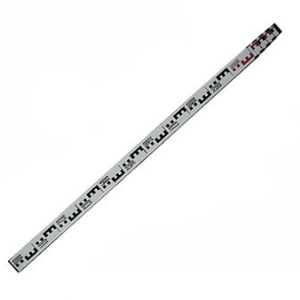
- Levelling staff: a graduated rod read through the level. It is also called a levelling rod or a self-reading staff.
- Digital Theodolite: measures horizontal and vertical angles and shows them on a display.
- Laser Distance Meter: times a laser pulse to a target and back, or compares phase, to give distance.
- Digital Planimeter: finds the area of a shape on a map or plan when you trace its outline. A mechanical planimeter does the same with a wheel and dial.
Total stations combine angle and distance measurement and are now common in final-year classes. Automatic levels are quicker to set up than dumpy levels and suit large groups.
Civil engineering lab tests and the equipment behind them
The tests below appear in most college syllabuses. Use them as a checklist when you ask civil engineering lab equipment manufacturers what they can supply.
Tests on bricks
- Water absorption: a dry brick is weighed, soaked for 24 hours, and weighed again. The gain as a percentage of dry weight is the absorption. Indian practice treats more than 20% as a sign of poor quality.
- Shape and size: a visual and dimensional check. Good bricks have sharp edges and even faces.
- Soundness: two bricks struck together should ring clearly, not thud.
- Compressive strength: bricks are crushed in a compression testing machine. Under IS 1077, the lowest class for common burnt clay bricks is 3.5 N/mm².
Tests on fine aggregate (sand)
- Bulking of sand: damp sand takes up more space than dry sand. This test measures that volumetric change so batching can allow for it.
- Bulk density: the mass of sand per unit volume, found with a standard measure.
- Silt content: fine silt and clay weaken concrete, so the test measures how much settles out of a shaken sample.
Tests on cement
- Standard consistency: the water content at which the Vicat plunger stops at a set depth in the paste.
- Setting time: the Vicat needle shows initial and final set.
- Fineness: by sieving or with a Blaine air permeability apparatus.
- Soundness: a Le Chatelier mould, or a Cement Autoclave, shows whether the cement expands after setting. The autoclave is a pressure vessel that holds steam at a set pressure and temperature.
- Compressive strength: mortar cubes are crushed at set ages, commonly 3, 7, and 28 days.
Tests on coarse aggregate
- Impact value: a falling hammer shows how the stone resists sudden shock.
- Abrasion value: the Los Angeles machine tumbles stone with steel balls to measure wear.
- Aggregate Crushing Value: stone is loaded slowly in a steel cylinder, and the fines produced show its crushing resistance.
Tests on concrete
The Concrete Test Hammer, also called a rebound hammer, gives a fast surface hardness reading on hardened concrete. A spring drives a mass against a plunger pressed on the surface, and the rebound is read on a scale. It supports, but does not replace, cube or core testing. Slump cones, cube moulds, and a compression testing machine complete the basic set.
Tests on soil
- Liquid limit and plastic limit: the water contents at which soil changes from liquid to plastic, and from plastic to semi-solid.
- Field density: the sand replacement (sand cone) method or a core cutter measures soil density on site to check compaction. Our catalog lists a sand cone and core cutter set.
Tests on steel
- Tension test: a universal testing machine pulls a bar to find yield strength, tensile strength, and elongation.
- Torsion test: one end of the bar is held while torque is applied to the other. The test gives shear strength and the modulus of rigidity, and shows how the bar resists twisting forces.
- Hardness test: a Brinell test presses a hard ball into the steel and measures the dent. This is done on a separate hardness tester, not the UTM.
Tests on bitumen
- Penetration: grades the binder by how far a loaded needle sinks in.
- Ductility: the distance a briquette stretches before it breaks.
- Stripping value: shows how well bitumen stays stuck to stone in the presence of water. A dedicated stripping test set is not in the online catalog; ask whether it can be quoted.
- Marshall test: an automatic Marshall compactor makes specimens in 101.6 mm moulds with a 4.54 kg rammer dropped 457 mm. The specimens are then tested for stability and flow.
How to compare civil engineering lab equipment manufacturers
Price alone says little about lab kit. Ask each supplier for the same things so you can compare like with like:
- A specification sheet for every item, with capacity, range, readout, materials, and power supply.
- The test standard each item is built to, such as IS, BS, ASTM, or EN.
- What comes in the box: moulds, weights, needles, and spares.
- Calibration or test reports for load machines, gauges, and balances.
- Export packing details, especially for glassware and optical instruments.
- Manuals, and how technical questions are handled after delivery.
Good civil engineering lab equipment manufacturers will answer these in writing. That written answer also becomes the backbone of your tender specification.
Next steps
Most civil engineering lab equipment manufacturers group their catalog by lab, and so do we. See the whole civil engineering lab instruments range, or go by lab: survey instruments, soil testing equipment, and aggregate testing equipment. For road materials, read our asphalt testing lab equipment guide.
Colleges buying through a public tender can use our tender documentation support. When your list is ready, ask for a quotation with quantities and the delivery country.