
Engineering Lab Equipment for Colleges and Educational Institutes: A Department-by-Department Guide
Engineering is learned by doing. Lectures explain the theory, but students only trust it once they have loaded a beam, run a pump, or traced a signal on an oscilloscope. This guide sets out engineering lab equipment for colleges and other institutes. It goes one department at a time. It also explains what each lab teaches and how to phase a purchase when the budget will not cover everything at once.
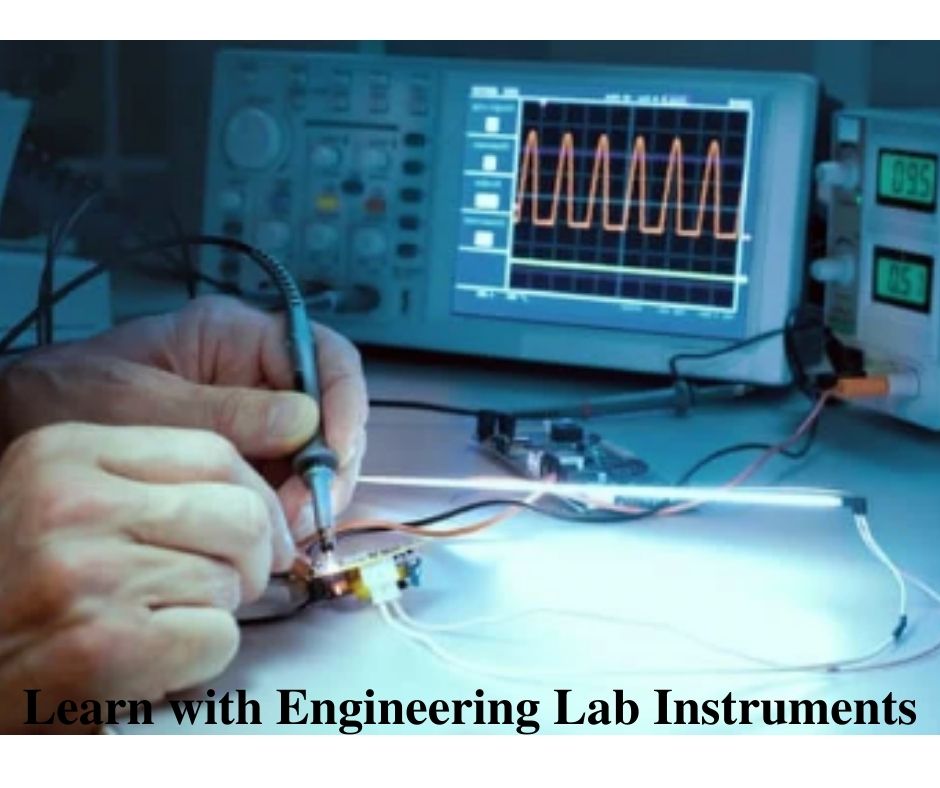
What engineering labs teach
Good lab work builds four skills that lectures cannot:
- Design: on a pipe friction rig, students choose the flow rates and readings they need before they start.
- Teamwork: on a compression test, one student loads the cube, one reads the gauge, and one records.
- Problem solving: when a transformer test gives an efficiency above theory, students must find the meter or wiring error.
- Data analysis: students plot pump curves or beam deflections and compare them with the textbook.
Each department uses different laboratory instruments to build these skills. The sections below set out the core engineering lab equipment for colleges in each branch.
Engineering lab equipment for colleges: the mechanical department
Mechanical lab equipment covers machines, fluids, and heat. A core set includes:
- Theory of machines apparatus: cams, gear trains, governors, and a gyroscope.
- Fluid rigs: a hydraulic bench, a Bernoulli rig, and a pipe friction rig.
- Heat transfer and thermodynamics rigs, plus engine test rigs.
- Cooling and air conditioning trainers.
- Engine and gearbox cut-away models for automotive topics.
See the mechanical lab equipment range for current items.
The civil lab
Civil labs test the materials that structures are built on and built from. Core kit tests soil, aggregate, cement, concrete, and bitumen. Survey tools are also needed. A universal testing machine is often shared with the mechanical department. Structures labs add beam, truss, and arch apparatus so students can compare measured forces and deflections with theory. Browse the civil engineering instruments.
The electrical and electronics labs
These labs teach circuits, machines, power, and signals. Core items include:
- Electrical machine panels for DC machines, induction motors, and transformers.
- Power electronics and control system trainers.
- Analog and digital electronics trainers.
- Test gear: meters, power supplies, and signal sources.
- An oscilloscope for each bench group.
The chemical lab
Chemical engineering lab equipment lets students run small versions of plant operations. Core rigs include reactors and distillation columns. Add heat exchangers, dryers, filter presses, and process control benches. The chemical engineering lab equipment range lists reactor rigs in detail.
Trade and skills labs
Many institutes also run trade courses. These use trainers that students can wire, strip down, and rebuild, such as house wiring boards, automotive models, and pneumatic kits. The technical educational equipment range covers these.
Planning a phased purchase of engineering lab equipment for colleges
Few institutes can equip every lab in one year. A phased plan keeps teaching on track and spreads the cost over several budget cycles.
- Phase 1: core practicals. Buy the rigs needed for first- and second-year practicals, plus shared test instruments such as multimeters and a universal testing machine.
- Phase 2: later-year practicals. Add rigs for final-year and elective practicals, such as turbines, refrigeration plants, and process control benches.
- Phase 3: projects and upgrades. Add data logging, computer-linked versions of existing rigs, and project equipment.
A sample phase 1 by department
| Department | Phase 1 priorities |
|---|---|
| Mechanical | Hydraulic bench with add-ons, cam and gear rigs, heat conduction set |
| Civil | Sieves, Proctor set, cube moulds, compression tester |
| Electrical | DC machine and transformer panels, meters, oscilloscopes |
| Chemical | Batch reactor, simple distillation unit, heat exchanger |
This is an example, not a rule. Your syllabus decides the real order. Map each practical to its year, then buy the rigs for the earliest years first.
Rules that keep a phased plan on track
- Buy spares and consumables with each phase, not after.
- Choose base units that later add-ons can fit, such as a hydraulic bench that takes more accessories.
- Check that phase 1 benches leave room and power points for phase 2 rigs.
- Keep a log for each rig, so later phases can learn from what was used most and what failed.
- Ask for quotes to be itemised, so a later phase can reorder the same model.
Choosing the right supplier
Ask each bidder for a spec sheet per item, a manual with experiment steps, and a list of spares. Check that the power ratings match your building. For a full set of quality checks, read how to choose engineering lab equipment.
Care and safety
Train staff on each rig before students use it. Keep guards on moving parts and check electrical leads often. Follow the maker's manual and your institution's safety officer for each lab's rules.
Getting a quote
LabExports makes and exports engineering lab equipment for colleges and institutes from India. Its catalog lists 3,365 products in 297 categories. Prices are quoted on request by quantity, specification, and destination. You can add items to a Quote List and send one request with quantities, a tender reference, and your delivery country. For public tenders, see the lab tenders page, or send your list through the quote request page.